

 Today: 23 October, Friday 13:44
in Paris
Today: 23 October, Friday 13:44
in Paris


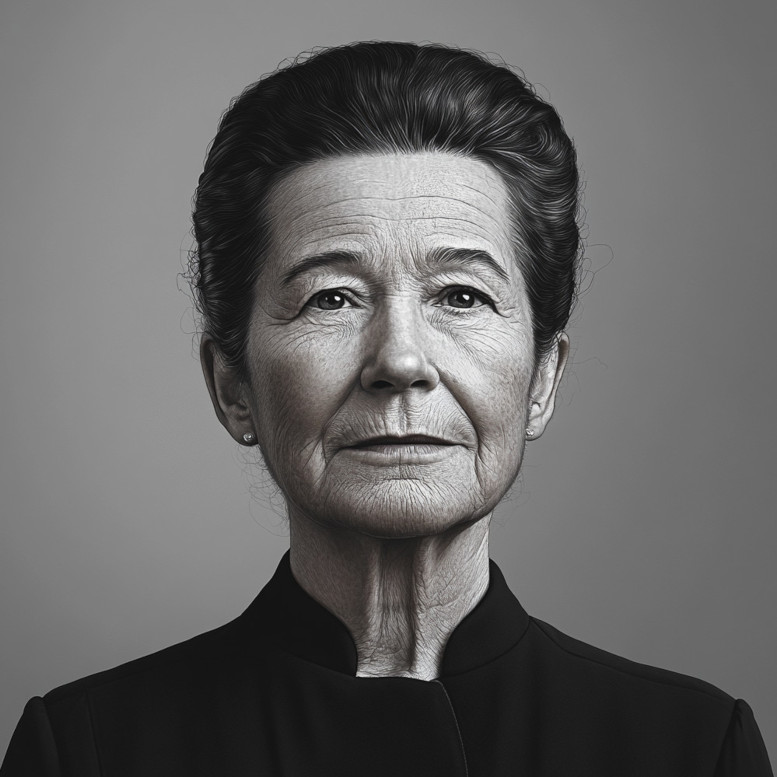
Simone de Beauvoir (1908–1986) was a French existentialist philosopher, writer, and feminist who played a pivotal role in the intellectual and feminist movements of the 20th century. She is best known for her seminal work, The Second Sex (1949), which is considered one of the foundational texts of modern feminism. De Beauvoir's writings, which explore themes of freedom, oppression, gender, and existentialism, have had a profound impact on feminist theory and continue to influence debates on gender equality and social justice.
Birth and Family Background: Simone de Beauvoir was born on January 9, 1908, in Paris, France, into a bourgeois Catholic family. Her father was a lawyer, and her mother was a devout Catholic. Despite her conservative upbringing, Beauvoir was encouraged by her father to pursue education and intellectual development, which set her on the path to becoming one of the leading intellectuals of her time.
Education: De Beauvoir was an exceptional student from a young age. She attended the Institut Catholique de Paris and later the Sorbonne, where she studied philosophy. At the Sorbonne, she became the youngest person ever to pass the rigorous agrégation examination in philosophy, ranking second in her year, just behind Jean-Paul Sartre, who would become her lifelong companion and intellectual partner.
Relationship with Sartre: Simone de Beauvoir and Jean-Paul Sartre met while studying in Paris and quickly formed a close intellectual and personal bond. Though they never married and maintained an open relationship, their partnership was one of the most famous intellectual collaborations of the 20th century. Together, they explored existentialism, a philosophical movement that emphasizes individual freedom, choice, and responsibility.
Existentialism: De Beauvoir and Sartre were key figures in the existentialist movement. Existentialism argues that existence precedes essence, meaning that individuals are not born with a predetermined purpose but must create their own meaning through choices and actions. This philosophy had a significant influence on de Beauvoir's work, particularly her exploration of the roles and identities imposed on women by society.
Early Works: De Beauvoir's early works include She Came to Stay (1943), a novel that explores existential themes of freedom, relationships, and the complexities of human interactions. Another significant work, The Blood of Others (1945), addresses moral dilemmas faced by individuals during World War II and reflects her growing interest in ethical questions.
The Second Sex (1949): Simone de Beauvoir's most influential work, The Second Sex, is a two-volume treatise that examines the historical, social, and psychological construction of women as the "Other" in a male-dominated society. De Beauvoir famously declared, "One is not born, but rather becomes, a woman," arguing that femininity is not a natural or inherent characteristic but a social construct imposed by patriarchal norms.
In The Second Sex, de Beauvoir analyzes the ways in which women have been systematically oppressed throughout history, denied the opportunity to define themselves, and relegated to a secondary status. The book covers a wide range of topics, including biology, psychoanalysis, history, literature, and myths, all to illustrate how society has perpetuated the subordination of women. The work was groundbreaking in its critique of patriarchy and became a cornerstone of feminist thought, inspiring the women's liberation movement and influencing generations of feminist scholars and activists.
Existential Feminism: De Beauvoir's philosophy of existentialism deeply informed her feminist views. She argued that women, like men, possess the capacity for freedom and self-determination, but societal structures have constrained their ability to exercise this freedom. By challenging these structures, women can reclaim their autonomy and define their own lives, rather than being defined by the roles assigned to them by society.
Political Involvement: Throughout her life, de Beauvoir was actively engaged in political causes, including the fight for women's rights, opposition to colonialism, and support for social justice movements. She was involved in campaigns for reproductive rights, including the right to abortion, and was a vocal critic of the Vietnam War and French colonialism in Algeria. Her political activism reflected her belief in the importance of individual responsibility and commitment to social change.
Later Works: In addition to her feminist writings, de Beauvoir continued to produce significant philosophical and literary works throughout her life. These include her autobiographical works, such as Memoirs of a Dutiful Daughter (1958), The Prime of Life (1960), Force of Circumstance (1963), and All Said and Done (1972). These memoirs provide insight into her personal life, her intellectual development, and her relationship with Sartre. Her novel The Mandarins (1954), which won the prestigious Prix Goncourt, explores the lives of intellectuals in post-war France and their struggles with political commitment and personal dilemmas.
Impact on Feminism: Simone de Beauvoir is widely regarded as one of the most important figures in the history of feminism. The Second Sex remains a foundational text in feminist theory, and its influence can be seen in various feminist movements, including second-wave feminism, which emerged in the 1960s and 1970s. Her work challenged traditional gender roles and inspired women to question and resist the limitations imposed on them by a patriarchal society.
Philosophical Contributions: Beyond feminism, de Beauvoir's contributions to existentialist philosophy are also significant. Her exploration of freedom, responsibility, and the human condition has had a lasting impact on existentialist thought and continues to be studied and debated by scholars and students of philosophy.
Cultural and Literary Influence: De Beauvoir's influence extends beyond philosophy and feminism to literature, politics, and culture. Her writings have inspired countless writers, activists, and thinkers, and her life and work continue to be the subject of biographies, documentaries, and academic studies.
Death: Simone de Beauvoir passed away on April 14, 1986, in Paris, France. She was buried alongside Jean-Paul Sartre in the Cimetière du Montparnasse in Paris. Her death marked the end of an era in French intellectual history, but her ideas and legacy continue to resonate.
Posthumous Recognition: De Beauvoir's work continues to be celebrated and studied worldwide. She has been honored with numerous posthumous awards and recognitions, and her influence on feminist thought and existentialist philosophy remains profound. Her life and work are regularly revisited in academic circles, and she is remembered as a trailblazer for women's rights and a powerful voice for social justice.
Simone de Beauvoir was a pioneering philosopher, writer, and feminist whose work has had a lasting impact on feminist theory, existentialist philosophy, and social thought. Her exploration of the construction of gender and her critique of the oppression of women challenged the status quo and laid the groundwork for modern feminism. De Beauvoir's intellectual legacy continues to inspire and provoke debate, making her one of the most significant thinkers of the 20th century.
We use cookies
We use cookies and other tracking technologies to improve your browsing experience on our website, to show you personalized content and targeted ads, to analyze our website traffic, and to understand where our visitors are coming from. Privacy Policy.







 Back
Back