


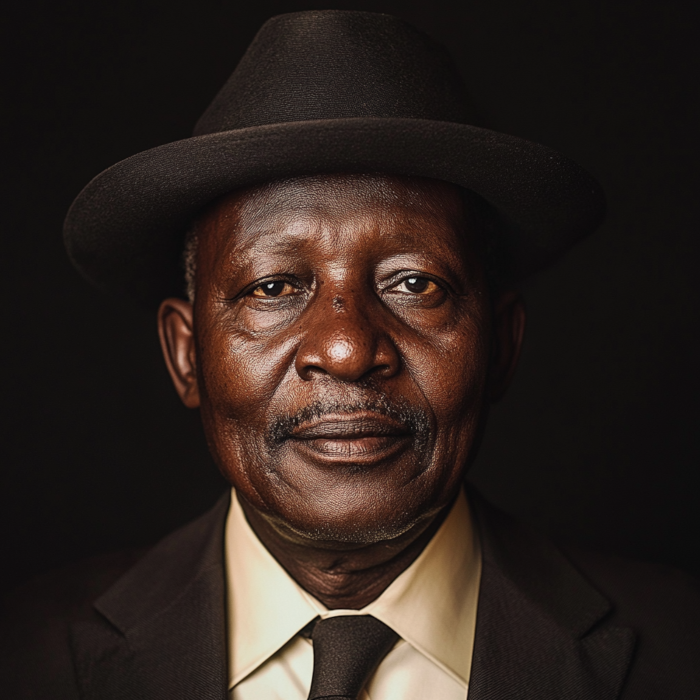
Yoweri Kaguta Museveni (born August 15, 1944) is a Ugandan politician and former military officer who has served as the President of Uganda since January 29, 1986. He is one of Africa's longest-serving leaders, having held power for nearly four decades. Museveni's presidency has been marked by both significant achievements in economic and social development as well as controversies related to human rights, political freedom, and his extended tenure in office.
Early Political Activities: After university, Museveni worked briefly in government before becoming involved in armed struggles against oppressive regimes in Uganda. He was a key figure in the formation of the Front for National Salvation (FRONASA), a rebel group opposed to the dictatorship of Idi Amin, who ruled Uganda from 1971 to 1979.
The Bush War: After the overthrow of Amin in 1979, Museveni became the Minister of Defence under the government of President Milton Obote. However, Museveni soon became disillusioned with Obote’s leadership, particularly after the controversial 1980 elections, which were widely believed to have been rigged in favor of Obote. In response, Museveni and his National Resistance Army (NRA) launched a guerrilla war, known as the Bush War or the Ugandan Civil War, against Obote's government.
Victory and Ascendancy to Power: After five years of intense conflict, Museveni’s NRA successfully overthrew the government in January 1986, leading to Museveni being sworn in as the President of Uganda. His rise to power was initially welcomed by many Ugandans and the international community, who saw him as a new leader capable of bringing stability and reform to a country long plagued by dictatorship and violence.
Economic and Social Reforms: In the early years of his presidency, Museveni implemented a series of economic reforms aimed at stabilizing Uganda’s economy, which had been devastated by years of war and mismanagement. His government introduced free-market policies, encouraged foreign investment, and improved infrastructure, which led to significant economic growth. Museveni also invested in social programs, particularly in health and education, leading to improvements in key indicators like life expectancy and literacy rates.
Decentralization and Political System: Museveni’s government introduced a system of decentralization, which aimed to empower local governments and improve public service delivery. He also promoted a "no-party" system, where political parties were technically banned, and candidates stood for election on individual merit. This system, however, was criticized for stifling political pluralism and was eventually replaced by a multi-party system after a referendum in 2005.
Involvement in Regional Conflicts: Museveni played a significant role in regional politics, particularly in the Great Lakes region. Uganda has been involved in conflicts in neighboring countries such as Rwanda, Sudan, and the Democratic Republic of the Congo. While Museveni has been praised for his role in peacekeeping efforts, Uganda's military interventions in these countries have also been controversial and have sometimes led to accusations of human rights abuses and exploitation of resources.
Extended Tenure and Constitutional Amendments: Museveni's long tenure in power has been a source of significant controversy. In 2005, his government removed presidential term limits from the constitution, allowing him to run for re-election. In 2017, the Ugandan parliament passed a bill to remove the presidential age limit of 75, effectively enabling Museveni to seek re-election indefinitely. These moves have been widely criticized as efforts to entrench his power.
Human Rights and Political Freedom: Museveni's government has faced criticism for its human rights record, particularly regarding the suppression of political opposition, freedom of the press, and civil liberties. Opposition leaders, activists, and journalists have been arrested, harassed, and in some cases, allegedly tortured. The government has also been accused of using security forces to intimidate voters and manipulate elections.
Election Controversies: Elections during Museveni's tenure have frequently been marred by allegations of fraud, voter intimidation, and violence. Despite these allegations, Museveni has consistently won re-election, with his supporters crediting him for the relative stability and economic growth Uganda has experienced under his leadership.
Economic Achievements: Museveni is often credited with bringing economic stability and growth to Uganda after years of turmoil under previous regimes. His policies have attracted foreign investment and significantly improved Uganda's infrastructure. Uganda's involvement in regional peace efforts has also given Museveni a prominent role in African politics.
Authoritarian Tendencies: However, his increasingly authoritarian rule, suppression of political opposition, and efforts to extend his time in office have tarnished his legacy. Critics argue that Museveni’s extended rule has undermined democratic institutions in Uganda and has led to increasing political repression.
Continued Leadership: As of 2021, Museveni was re-elected for a sixth term in a highly contentious election. His continued leadership raises ongoing debates about the future of democracy in Uganda and the potential for political transition.
Family: Museveni is married to Janet Kataaha Museveni, who has served in various ministerial roles in the Ugandan government, including as Minister of Education and Sports. The couple has four children. Janet Museveni is also an influential figure in Ugandan politics and society.
Publications: Museveni has authored several books, including Sowing the Mustard Seed, an autobiography that details his early life, the Bush War, and his rise to power. His writings provide insight into his political philosophy and vision for Uganda.
Yoweri Museveni is a complex and polarizing figure in Ugandan and African politics. His leadership has brought significant economic development and stability to Uganda, but it has also been marked by increasing authoritarianism, suppression of political opposition, and a refusal to relinquish power. As one of Africa's longest-serving leaders, Museveni's legacy will be debated for years to come, particularly in terms of the balance between the achievements of his early presidency and the criticisms of his extended rule.
We use cookies
We use cookies and other tracking technologies to improve your browsing experience on our website, to show you personalized content and targeted ads, to analyze our website traffic, and to understand where our visitors are coming from. Privacy Policy.