

 Today: 02 September, Wednesday 09:24
in Luanda
Today: 02 September, Wednesday 09:24
in Luanda


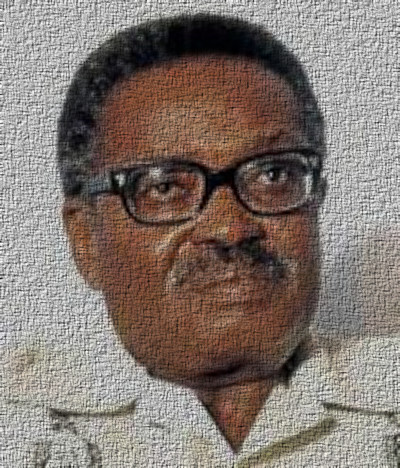
António Agostinho Neto (1922–1979) was an Angolan politician, poet, and revolutionary who served as the first President of Angola from 1975 until his death in 1979. He was a leading figure in Angola's struggle for independence from Portuguese colonial rule and is celebrated as a national hero and the founding father of the Angolan nation. Neto was also a prominent poet, whose writings expressed his deep commitment to the fight for freedom and social justice.
Birth and Background: António Agostinho Neto was born on September 17, 1922, in Ícolo e Bengo, a village in the Bengo Province of Angola, which was then a Portuguese colony. He was born into a well-educated family; his father was a Methodist pastor and teacher, and his mother was a schoolteacher. Neto's upbringing in a religious and intellectual environment deeply influenced his worldview and his later involvement in the anti-colonial struggle.
Education: Neto received his early education in Angola before moving to Lisbon, Portugal, to study medicine at the University of Lisbon. It was during his time in Portugal that Neto became involved in political activism, joining student movements and associating with other African intellectuals and activists who were advocating for the independence of their countries from colonial rule. His experiences in Portugal, where he witnessed the harsh realities of colonialism and racial discrimination, further radicalized him and deepened his commitment to the anti-colonial cause.
Return to Angola and Political Activism: After completing his medical studies, Neto returned to Angola in the early 1950s, where he continued to practice medicine while also becoming increasingly involved in the nationalist movement. He became a leading figure in the Popular Movement for the Liberation of Angola (MPLA), a Marxist-oriented political and military organization that sought to end Portuguese colonial rule and achieve independence for Angola.
Arrest and Imprisonment: Neto's political activism made him a target of the Portuguese colonial authorities. In 1955, he was arrested and imprisoned for his involvement in anti-colonial activities. His imprisonment sparked protests in Angola and among his supporters abroad, drawing international attention to the plight of Angolan nationalists. Despite being jailed, Neto continued to be a symbol of resistance, and his writings from prison, particularly his poetry, reflected his unyielding commitment to the struggle for freedom.
Release and Exile: After spending several years in prison, Neto was released in 1962 and went into exile, first in Morocco and later in Congo-Brazzaville (now the Republic of the Congo). In exile, he continued to lead the MPLA, strengthening its organizational structure and seeking support from other African countries and socialist states, including the Soviet Union and Cuba. The MPLA became one of the main factions fighting against Portuguese rule during the Angolan War of Independence (1961–1974).
Role in the War of Independence: Under Neto's leadership, the MPLA emerged as a dominant force in the struggle for Angolan independence, alongside other nationalist groups like the National Front for the Liberation of Angola (FNLA) and the National Union for the Total Independence of Angola (UNITA). The MPLA received significant support from the Soviet Union, Cuba, and other socialist countries, which provided military training, weapons, and logistical support. The war was marked by intense fighting and significant loss of life, but it also demonstrated the determination of Angolans to achieve self-rule.
Independence and Civil War: The Carnation Revolution in Portugal in 1974, which overthrew the Portuguese dictatorship, led to the rapid decolonization of Portuguese territories, including Angola. On November 11, 1975, Angola officially gained its independence, and António Agostinho Neto became the country's first President. However, the end of colonial rule did not bring peace to Angola, as the country quickly descended into a brutal civil war, with the MPLA fighting against rival factions FNLA and UNITA, both of which were supported by the United States and South Africa.
Building a Socialist State: As President, Neto sought to establish Angola as a socialist state, guided by Marxist-Leninist principles. He nationalized key industries, including oil and diamonds, and sought to centralize political and economic control under the MPLA. Neto's government focused on rebuilding the war-torn country, providing social services, and promoting education and healthcare. However, these efforts were hampered by ongoing conflict, economic challenges, and the complexities of managing a diverse and divided nation.
Challenges and Internal Strife: Neto’s presidency was marked by significant challenges, including the continuation of the civil war, which drained resources and prevented the country from achieving stability and development. Additionally, Neto faced internal divisions within the MPLA, including a factional struggle known as the "Nitista" rebellion in 1977, led by Nito Alves, which was violently suppressed. The civil war and internal strife created a difficult environment for governance and hindered efforts to build a cohesive and unified nation.
Death: António Agostinho Neto died on September 10, 1979, in Moscow, Soviet Union (now Russia), where he had gone for medical treatment. His death was a significant loss for Angola and the MPLA, as he had been the central figure in the country’s struggle for independence and its early years of nation-building.
Legacy: António Agostinho Neto is revered in Angola as the founding father of the nation and a symbol of the struggle for independence. His contributions to Angola's liberation and his leadership during the early years of independence have left a lasting impact on the country's history and identity. Neto's poetry, which often reflected the themes of liberation, resistance, and social justice, continues to be celebrated both in Angola and beyond.
Honors and Recognition: Neto's legacy is commemorated in various ways in Angola and other parts of Africa. His birthday, September 17, is a national holiday in Angola known as "National Heroes Day," honoring his contributions to the country’s independence. His writings, particularly his poetry, are still studied and admired for their powerful expression of the African experience and the quest for freedom. The Agostinho Neto University in Luanda, Angola's largest public university, is named in his honor.
António Agostinho Neto was a key figure in Angola's fight for independence and the country's first president. His leadership of the MPLA during the liberation struggle and his vision for a socialist Angola helped shape the nation's trajectory during its formative years. Despite the challenges and conflicts that marked his presidency, Neto remains a revered figure in Angola and a symbol of the country's hard-won independence. His legacy as a poet and a revolutionary leader continues to inspire generations in Angola and across Africa.
We use cookies
We use cookies and other tracking technologies to improve your browsing experience on our website, to show you personalized content and targeted ads, to analyze our website traffic, and to understand where our visitors are coming from. Privacy Policy.






 Back
Back