

 Today: 04 June, Thursday 15:48
in Islamabad
Today: 04 June, Thursday 15:48
in Islamabad


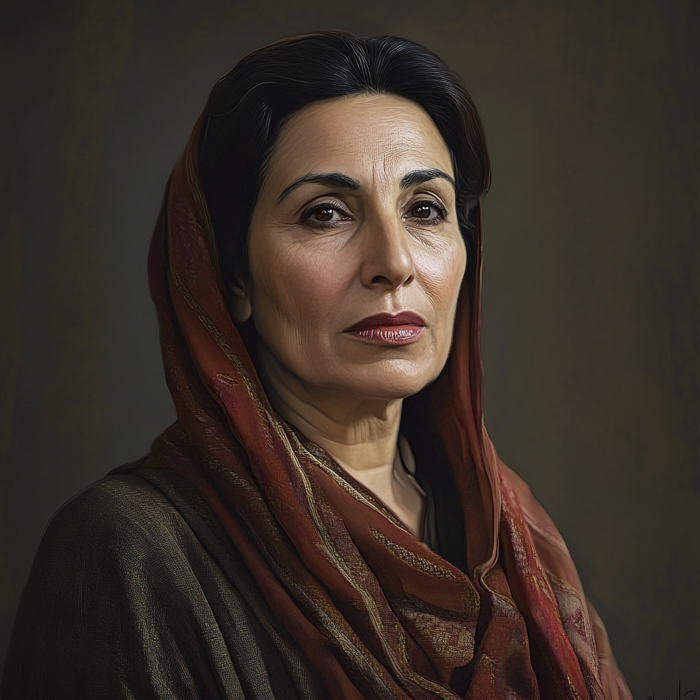
Benazir Bhutto (1953–2007) was a Pakistani politician who served as the first female Prime Minister of Pakistan, as well as the first woman to head a democratic government in a Muslim-majority country. She served two non-consecutive terms as Prime Minister from 1988 to 1990 and from 1993 to 1996. Bhutto was the daughter of Zulfikar Ali Bhutto, a former Prime Minister and President of Pakistan. She led the Pakistan Peoples Party (PPP) and was known for her advocacy for democracy, economic reform, and social justice. Despite her charismatic leadership, her political career was marred by controversy, allegations of corruption, and her tragic assassination in 2007.
Birth and Family Background: Benazir Bhutto was born on June 21, 1953, in Karachi, Pakistan. She was the eldest child of Zulfikar Ali Bhutto, who founded the Pakistan Peoples Party (PPP) and served as Prime Minister and President of Pakistan, and Nusrat Bhutto, an Iranian-Kurdish political activist. Benazir belonged to a prominent political family, with her father being one of Pakistan's most influential leaders. She grew up in a politically charged environment that influenced her interest in politics.
Education in the West: Benazir Bhutto received her early education in Pakistan before pursuing higher education abroad. She attended Harvard University, where she earned a Bachelor's degree in Comparative Government from Radcliffe College in 1973. She then attended Oxford University, where she studied Philosophy, Politics, and Economics (PPE) and became the first Asian woman to be elected President of the Oxford Union, the prestigious debating society. Her time in the West exposed her to democratic ideas, and she developed a strong belief in the importance of political freedom and social justice.
Return to Pakistan and Political Turmoil: Benazir Bhutto returned to Pakistan in 1977, shortly before her father, Zulfikar Ali Bhutto, was overthrown in a military coup led by General Muhammad Zia-ul-Haq. Her father was arrested and later executed in 1979 after being convicted of authorizing the murder of a political opponent in a controversial trial. The execution of her father deeply affected Benazir and strengthened her resolve to continue his legacy. During the years of military rule under Zia-ul-Haq, Benazir was placed under house arrest multiple times and spent time in prison, facing harsh conditions.
Leadership of the Pakistan Peoples Party: After her father's death, Benazir Bhutto emerged as the leader of the Pakistan Peoples Party (PPP), which her father had founded to promote socialist economic policies and democracy. Benazir became a symbol of resistance against the military regime and campaigned tirelessly for the restoration of democracy in Pakistan. Her leadership made her a target of the military government, and she spent several years in exile in London.
Return and Democratic Elections: Following the death of General Zia-ul-Haq in a plane crash in 1988, Pakistan held its first elections since the imposition of martial law. The PPP, under Benazir's leadership, won the most seats, and at the age of 35, Benazir Bhutto was sworn in as the Prime Minister of Pakistan on December 2, 1988, becoming the first woman to lead a Muslim-majority nation.
First Term as Prime Minister (1988–1990): During her first term as Prime Minister, Benazir Bhutto focused on economic reform, social welfare, and women's rights. She sought to reduce poverty, improve healthcare and education, and empower women. Her government also worked to release political prisoners and promote freedom of the press, which had been suppressed during the years of military rule. However, her administration faced significant challenges, including economic difficulties, political infighting, and tensions with the military establishment. In 1990, her government was dismissed by President Ghulam Ishaq Khan, who accused her of corruption and mismanagement.
Second Term as Prime Minister (1993–1996): Benazir Bhutto returned to power in 1993 after the PPP won the general elections. During her second term, she continued her efforts to promote social welfare, including improvements in healthcare and education, and took steps to modernize Pakistan's economy by encouraging foreign investment and privatizing state-owned industries. However, her government again faced accusations of corruption, and her efforts were hampered by power struggles with the military and political opponents. In 1996, her government was dismissed by President Farooq Leghari amid allegations of corruption and poor governance.
Controversies and Corruption Allegations: Benazir Bhutto's two terms as Prime Minister were marred by numerous allegations of corruption, many of which involved her husband, Asif Ali Zardari, who came to be known as "Mr. Ten Percent" for his alleged role in accepting kickbacks. Both Benazir and Zardari denied these allegations, claiming that they were politically motivated attempts to discredit them. Zardari was imprisoned for several years on corruption charges, and Benazir herself faced multiple investigations both in Pakistan and abroad.
Exile in Dubai and Continued Activism: After her government was dismissed in 1996, Benazir Bhutto faced increasing legal pressures, and in 1999, she went into self-imposed exile in Dubai and London to avoid arrest. During her years in exile, she remained active in politics, leading the PPP and speaking out against the military government of General Pervez Musharraf, who had seized power in a coup in 1999. She continued to advocate for democracy and human rights in Pakistan, giving speeches and writing articles about the need for a return to civilian rule.
Negotiations with Musharraf and Return to Pakistan: In 2007, Benazir Bhutto began negotiations with General Musharraf, who was under international pressure to allow a return to democracy. As part of these negotiations, Musharraf granted her amnesty from the corruption charges that had been leveled against her. Bhutto returned to Pakistan in October 2007 to participate in the upcoming general elections, which were part of the transition back to democratic governance. Her return was marked by mass rallies and celebrations by her supporters, but it also made her a target for militant groups opposed to her liberal and secular policies.
Assassination in 2007: On December 27, 2007, Benazir Bhutto was assassinated during a campaign rally in Rawalpindi. As she left the rally, a gunman fired shots at her, and a suicide bomber detonated explosives near her vehicle, killing Bhutto and at least 20 others. Her assassination shocked the nation and the international community, leading to widespread mourning and outrage. The perpetrators of the attack were never definitively identified, but the Pakistani government and U.S. officials pointed to links with al-Qaeda and Taliban militants.
Impact on Pakistani Politics: Benazir Bhutto's assassination left a significant void in Pakistani politics. She was a charismatic and popular leader, especially among women, rural communities, and the marginalized. Her death led to an outpouring of grief, and her husband, Asif Ali Zardari, and her son, Bilawal Bhutto Zardari, took on leadership roles in the PPP. The party won the general elections in 2008, and Zardari became President of Pakistan.
Champion of Democracy and Women's Rights: Benazir Bhutto is remembered as a champion of democracy and women's rights. As the first female Prime Minister of a Muslim-majority country, she became a symbol of progress and empowerment for women across the Muslim world. Her determination to challenge the military establishment and her resilience in the face of political adversity earned her respect both in Pakistan and internationally.
Criticism and Controversies: Despite her accomplishments, Benazir Bhutto's political legacy is not without controversy. Her terms as Prime Minister were criticized for corruption, inefficiency, and poor governance, which contributed to the challenges faced by her administration. Many of her critics argue that her failure to curb corruption and her government's inability to address issues such as poverty and extremism weakened her political standing and limited her effectiveness as a leader.
Role Model for Women: Benazir Bhutto's election as Prime Minister broke significant barriers for women in Pakistan and the broader Muslim world. She inspired many women to enter politics and public service and became a symbol of women's empowerment. Her leadership demonstrated that women could hold the highest political office, even in a conservative and male-dominated society, and her courage in facing adversity continues to inspire women's rights advocates globally.
Advocate for Democracy: Bhutto's lifelong struggle for democracy and civilian rule left a lasting impact on Pakistan's political landscape. She consistently spoke out against military dictatorships and worked to restore democratic governance in Pakistan. Her vision of a democratic Pakistan, free from military rule and extremism, continues to resonate with many Pakistanis who advocate for a more open and democratic society.
Pakistan Peoples Party (PPP): Benazir Bhutto's legacy is closely linked to the Pakistan Peoples Party (PPP), which she led for much of her political career. Under her leadership, the PPP became one of the most influential political parties in Pakistan, advocating for social justice, economic reform, and democratic governance. After her assassination, the PPP continued to play a significant role in Pakistani politics, with her son, Bilawal Bhutto Zardari, assuming a leadership role in the party.
Benazir Bhutto was a pioneering leader whose courage, resilience, and determination helped shape modern Pakistani politics. As the first female Prime Minister of Pakistan and the first woman to lead a democratic government in a Muslim-majority country, she broke significant barriers and became a symbol of progress, especially for women. Her commitment to democracy, social justice, and women's rights made her a beloved figure in Pakistan and an inspiration to many around the world.
Despite her achievements, Benazir Bhutto's political career was marked by controversy, and her governments faced significant challenges, including allegations of corruption and conflicts with the military establishment. Her assassination in 2007 deprived Pakistan of a charismatic leader who had worked tirelessly for democratic governance. Her legacy, however, endures through her family, her party, and her continued influence on Pakistan's political discourse.
We use cookies
We use cookies and other tracking technologies to improve your browsing experience on our website, to show you personalized content and targeted ads, to analyze our website traffic, and to understand where our visitors are coming from. Privacy Policy.







 Back
Back